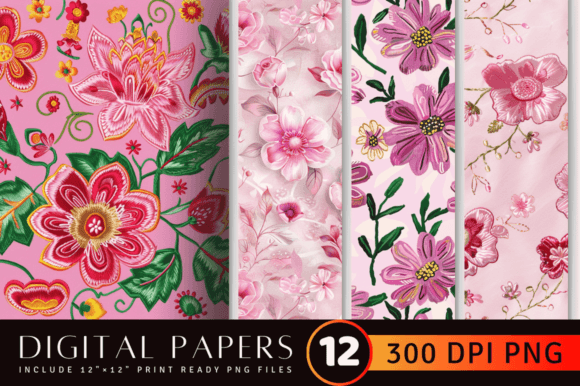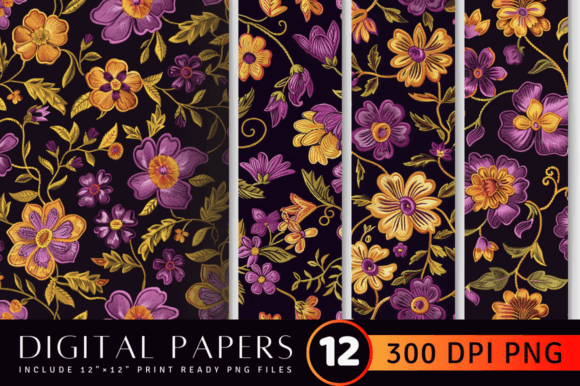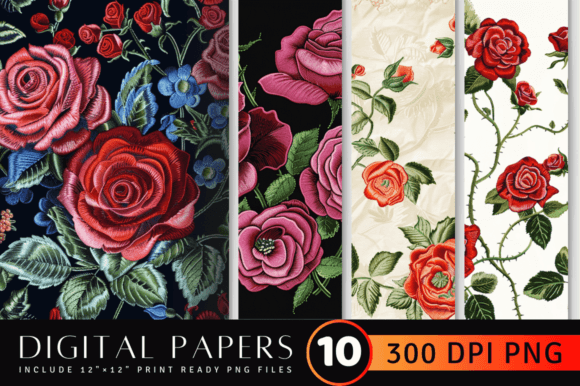
Roses Embroidery Flowers Digital Paper Review
As I spread out my sample inventory on the folding table, preparing for another weekend of craft fairs and handmade markets, my eyes keep drifting back to a specific file on my tablet: Roses Embroidery Flowers Digital Paper. In the world of digital embroidery file assets, titles can sometimes be misleading, but this one strikes a chord that feels both nostalgic and commercially viable. As an experienced embroidery designer, I am constantly judging designs not just by how they look on a screen, but by how they will perform under the harsh fluorescent lights of a convention center or the soft natural light of an outdoor market. This review is my real-world assessment of whether this design belongs in your next batch of craft fair product offerings.
First Impressions and Market Mood
The initial impression of Roses Embroidery Flowers Digital Paper is one of timeless elegance mixed with a touch of rustic charm. The title suggests a blend of classic floral motifs with the versatility needed for modern applications. It does not scream "funny" or "festive" in a holiday-specific way; instead, it leans heavily into the farmhouse and premium aesthetic that dominates current home decor trends. For boutique makers and creative entrepreneurs, this mood is gold. It fits seamlessly into the "cottagecore" movement while remaining sophisticated enough for high-end bridal showers or housewarming gifts. When I visualize this as a handmade product, I see it appealing to customers who value tradition but want something fresh. It feels decorative yet substantial, promising a finished look that elevates simple blanks into something special.
Product Versatility and Visual Impact
The true test of any machine embroidery design is its adaptability across different substrates. Roses Embroidery Flowers Digital Paper shines brightest when applied to items that offer a large, flat canvas. Imagine a natural cotton tote bag design; the floral elements would pop beautifully against the neutral fabric, creating an instant statement piece that shoppers love to grab. Similarly, for apron embroidery, this design serves as a perfect focal point on the bib, turning a utilitarian kitchen item into a cherished heirloom.
I also see strong potential for tea towel embroidery. Kitchen textiles are staples at craft fairs, and a rose motif adds a layer of warmth that plain linens lack. However, one must be cautious with fabric texture. On thick, waffle-weave towels, fine details might get lost, so this design likely performs best on smoother linen or cotton blends. For smaller items like embroidered patch applications or fabric pouches, the design would need to be scaled down carefully. If the original file allows for resizing without losing clarity, it could become a stunning accent on a zipper pull or a pocket detail. Even for pillow covers and market bags, the visual weight of the roses suggests it can hold its own as a central graphic, drawing the eye from across the aisle.
Production Practicality and Batch Selling
From a production standpoint, the viability of Roses Embroidery Flowers Digital Paper depends on its stitch density and complexity. For a busy craft fair season, repeatability is key. If the design features overly dense fill stitches, it may cause puckering on lighter fabrics or take too long to run, eating into your profit margins. Conversely, if it utilizes a mix of satin and fill stitches effectively, it offers a rich texture that photographs incredibly well for your Etsy seller listings. A good printable mockup starts with a great physical sample, and this design has the potential to create stunning images for social media, driving traffic to your online shop even while you are manning a booth.
When considering commercial embroidery runs, consistency is everything. Does the design look the same on the tenth hoop as it did on the first? Designs with complex gradients or tiny details often suffer in batch production. Based on the "Digital Paper" description, which implies a blend of tactile and digital versatility, I anticipate this file is optimized for clean lines. This makes it an excellent candidate for a small shop product line where you might produce twenty tote bags in a weekend. The visual appeal directly impacts buyer engagement; a crisp, clear rose design signals quality craftsmanship, allowing you to justify a higher price point for your finished product.
Critical Considerations for Execution
Before committing to a full production run, there are several "careful-use" notes every designer must heed. First, evaluate the thread colors. Roses often require subtle shading; ensure your thread chart matches the vibrancy needed for the design to stand out, especially on dark fabrics where contrast is crucial. Second, consider the surface. While great for flat bags, applying this to curved surfaces like caps requires careful hooping and potentially a different stabilizer strategy to prevent distortion. Tiny details within the petals or leaves might disappear if the design is reduced too small for patches or children's clothing.
Furthermore, always check the hoop size requirements. Large floral arrangements often demand a larger frame, which can limit the number of items you can hoop at once if you are using a multi-head machine. Regarding stabilizer, floral designs with significant fill areas usually benefit from a cut-away stabilizer to maintain shape over time, whereas a tear-away might suffice for lighter applications on stable woven fabrics. Since the product description mentions it is ideal for professionals and enthusiasts, it is vital to verify the licensing terms. Ensure you have the right to sell finished products made with this file, as some design assets restrict commercial use.
Final Designer Verdict
In conclusion, Roses Embroidery Flowers Digital Paper appears to be a robust addition to a portfolio focused on home goods and wearable art. Its strength lies in its emotional resonance—roses are universally loved—and its likely adaptability across various Patterns and Graphics categories. To maximize success, I recommend testing the design on scrap fabric first to gauge stitch density and thread consumption. Create at least one real mockup on a high-quality tote or apron to serve as your booth sample. Compare how it looks on cream versus navy fabric to determine your best sellers. By paying attention to these practical details, you can transform this digital file into a tangible asset that drives sales and enhances your brand consistency. Remember, if specific technical details like exact stitch counts or file formats are not explicitly provided in the download, always reach out to the creator or check the documentation before starting your machines. With the right preparation, this design could be the star of your next market display.