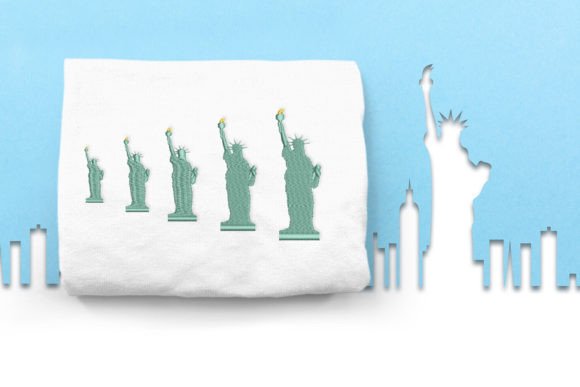
Review: Statue of Liberty Mini for Real Projects
As a designer who spends more time staring at stitch maps than most people spend looking at actual art, I approach every new machine embroidery design with a mix of optimism and skepticism. We have all been there: you download a file that looks crisp on the screen, only to find it turns into a puckered mess or an indistinguishable blob once it hits the fabric. That is why I took a close look at the Statue of Liberty Mini before committing it to any client work or personal projects. This isn't just about whether the design is "cute"; it is about whether it holds up under the needle, survives a wash cycle, and actually adds value to the finished product.
The first impression of this design is its compact efficiency. In the world of North America themed graphics, Lady Liberty is often rendered with excessive detail that simply does not translate well to thread. However, this mini version seems to understand the limitations of the medium. The silhouette is recognizable immediately, capturing the iconic crown and torch without getting bogged down in facial features that would require microscopic stitching. For a small-scale embroidery project, this restraint is crucial. It creates a mood of patriotic pride without feeling cluttered, making it versatile enough for everything from a subtle chest logo on a hoodie to a central motif on a kitchen towel.
Putting the Design to the Test: A Real-World Scenario
To truly evaluate the Statue of Liberty Mini, I simulated a common request I get from local boutique owners: a run of custom tote bags for a summer street fair in New York City. The goal was to create a handmade product that felt authentic to the city but wasn't so large that it dominated the bag's canvas texture. I loaded the embroidery file onto my machine, hooped a sturdy cotton canvas, and let it run.
The stitching process revealed a lot about the design's internal logic. The torch and the tablet appear to utilize a combination of satin stitch borders and tight fill stitch areas. This is a smart choice for a design of this scale. Satin columns provide definition to the edges, ensuring the statue doesn't bleed into the background fabric, while the fill gives it substance. During the stitch-out, I noticed the transition between color blocks was handled with clean trim jumps rather than messy travel stitches, which is a good sign for production speed if you are an Etsy seller running multiple units.
Once the hoop was removed and the stabilizer was torn away, the result was impressive. The design sat flat against the textured canvas. There was no significant pull or distortion, which often happens with dense designs on flexible materials. For a tote bag design like this, where the item will be stuffed with groceries or books, that structural integrity is non-negotiable. The thread colors popped nicely against the natural beige of the canvas, proving that this design has strong visual contrast even without complex shading.
Ideal Applications for Small Business and Crafters
Beyond tote bags, the versatility of the Statue of Liberty Mini shines in several other areas. If you are a craft business owner looking to expand your design assets, here is where this file fits best:
- Custom Apparel: It is perfectly sized for left-chest logos on polo shirts or sweatshirt embroidery. It adds a touch of location-specific flair without overwhelming the garment.
- Baby Embroidery: The simplified lines make it safe and soft enough for baby onesies or bibs, provided you use a soft backing stabilizer to prevent scratchiness.
- Embroidered Patches: Because the outline is distinct, this design works exceptionally well as a merit badge-style patch on denim jackets or backpacks.
- Holiday Embroidery: Naturally, it is a staple for Fourth of July collections, but it also serves as a great year-round souvenir for tourists visiting the Big Apple.
For commercial embroidery projects, the scalability is key. Whether you are branding aprons for a bakery or creating uniform patches for a tour company, this design maintains its identity at small sizes. It avoids the "muddy" look that plagues many digital downloads when resized.
Critical Considerations and Fabric Choices
While the Statue of Liberty Mini performs well, no design is universal. There are specific scenarios where you need to exercise caution. If you are working with stretchy fabrics like jersey knits or thin silks, the density of the fill stitches might cause puckering. In these cases, investing in a high-quality cut-away stabilizer is mandatory. Do not try to save money on stabilizer here; the stability of the torch and crown depends on it.
Additionally, consider the hoop size constraints. While this is a "mini" design, ensure your specific machine format fits within your available hoop, especially if you are embroidering on curved surfaces like caps. Cap embroidery can be tricky with detailed fills; the curvature might distort the vertical lines of the statue slightly. I recommend testing a sample on a scrap piece of the exact cap material before committing to a full production run.
Dark fabrics present another challenge. The design relies on light tones for the statue itself. If stitching onto black or navy blue, you may need to adjust the underlay settings or add a white underbase layer if your software allows, to prevent the dark fabric from showing through the lighter threads and dulling the image.
Enhancing Brand Value and Customer Trust
From a business perspective, the quality of your digital embroidery file directly impacts your brand reputation. A clean, well-digitized design like the Statue of Liberty Mini signals professionalism. When a customer receives a personalized gift or a small shop product with crisp, clear stitching, their trust in your brand increases. Conversely, a design with skipped stitches or poor coverage can lead to returns and negative reviews.
This design helps maintain brand consistency because it is versatile enough to fit various product lines without looking out of place. Whether used on a premium leather journal cover or a simple tea towel, the aesthetic remains cohesive. For those creating printable mockups for online listings, the clean lines of this design photograph beautifully, making it easier to generate compelling marketing images that drive buyer engagement.
Final Verdict and Designer Notes
After putting the Statue of Liberty Mini through its paces, I feel confident recommending it for both personal and commercial use, provided you follow standard best practices. It captures the spirit of North America's most famous landmark without sacrificing technical feasibility. It is a solid addition to any library of Embroidery designs focused on travel, patriotism, or city life.
Before you start stitching, keep these practical notes in mind:
- Test First: Always stitch a sample on scrap fabric similar to your final material to check tension and density.
- Check Licensing: Verify the license terms included with the file. Ensure you are cleared for commercial sales if you plan to sell finished items.
- Thread Contrast: Experiment with thread colors. While traditional copper and green work, monochromatic schemes can offer a modern twist.
- Inspect Details: Zoom in on the digitized preview to ensure the tiny details of the crown spikes are not too close together for your machine's resolution.
- File Formats: Confirm that the package includes the specific format your machine requires, as compatibility varies by brand.
In conclusion, the Statue of Liberty Mini is a reliable, well-thought-out asset. It respects the constraints of machine stitching while delivering a recognizable and appealing image. For designers and makers looking to add a touch of New York charm to their repertoire, this design is a worthy investment that stands up to real-world application.